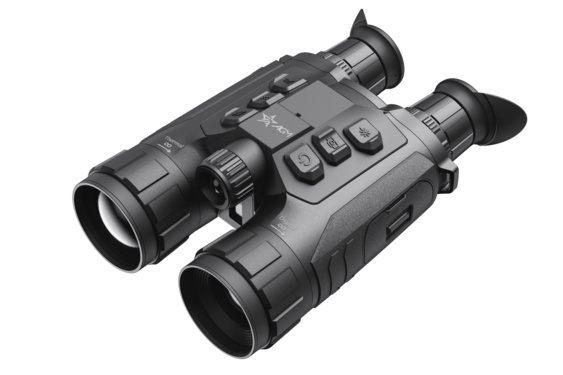
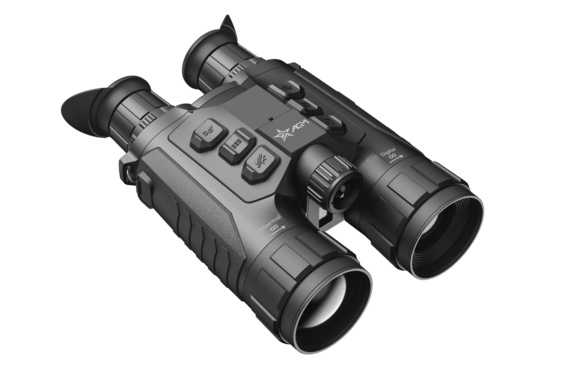
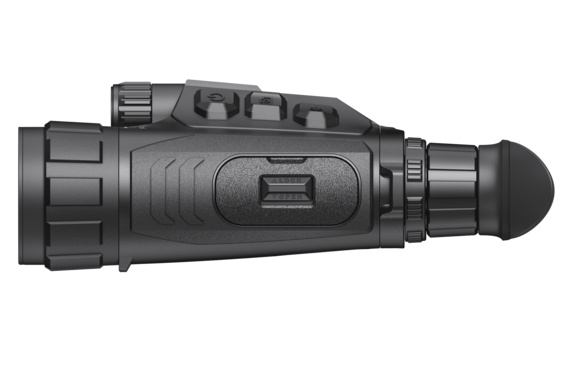
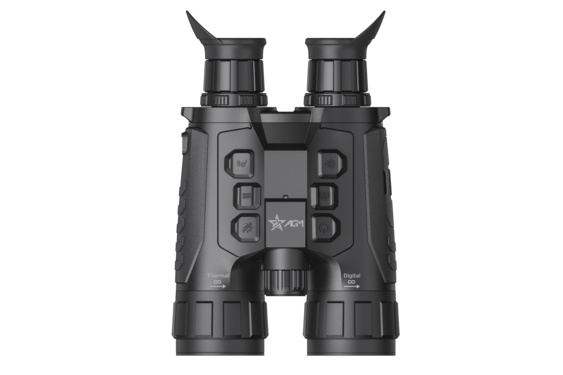
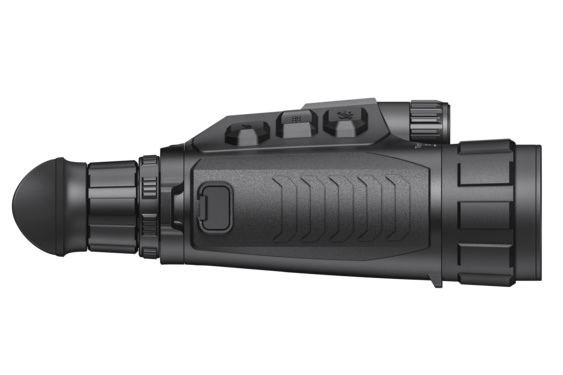
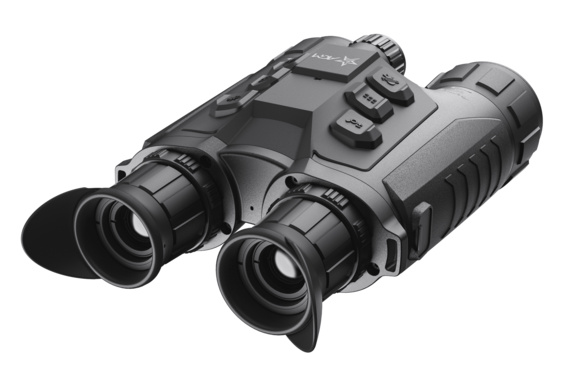
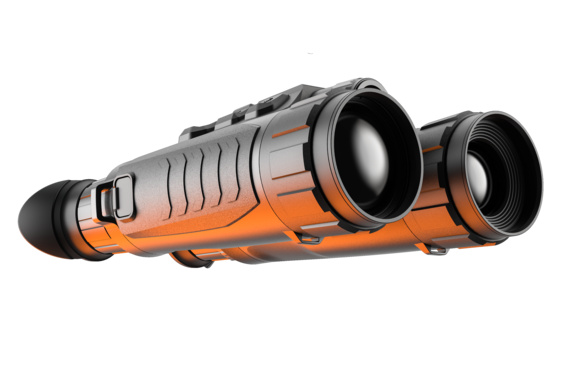
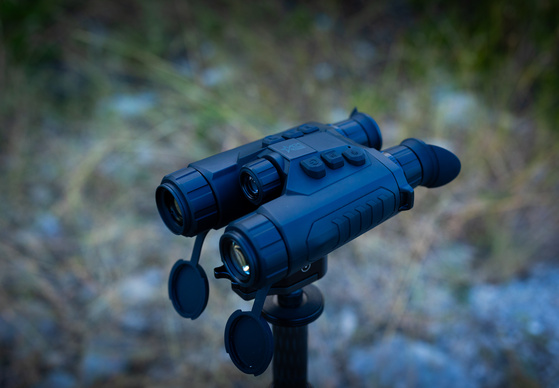
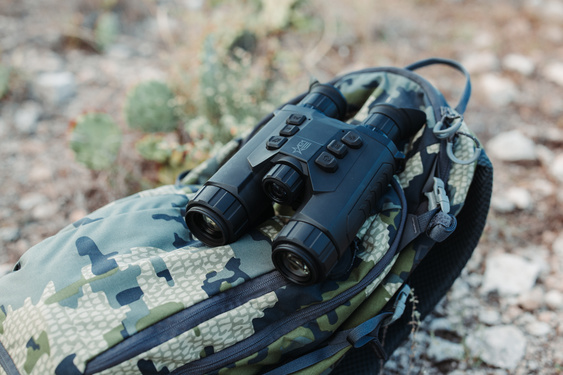
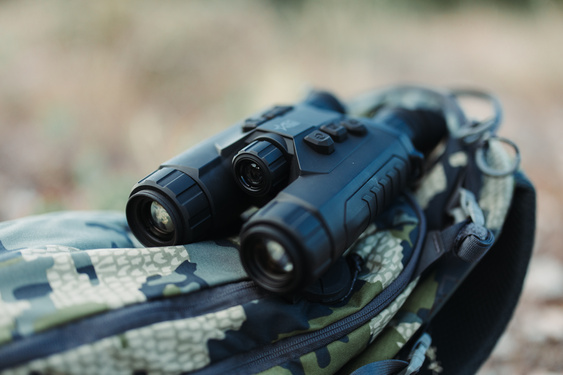
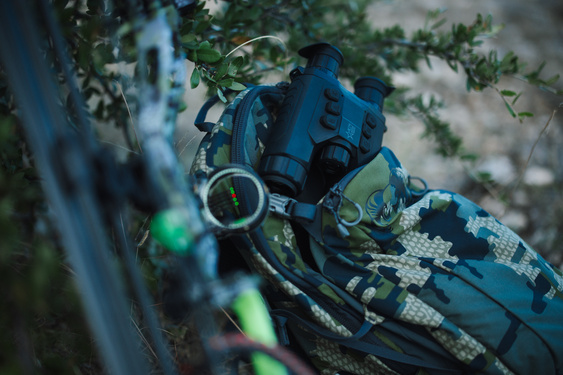
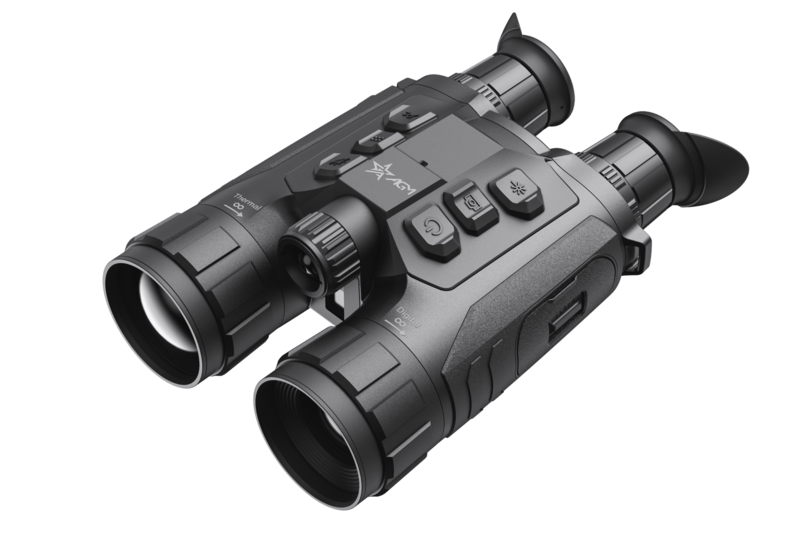
The AGM ObservIR LRF Thermal & Digital Day/Night Vision binocular is some of the most technologically advanced and
feature-packed optics in the world. The primary engine behind these binocular lies within the main thermal viewing channel,
with its high-sensitivity 12 micron detector. Unlike other thermal binoculars on the market, the ObservIR LRF also come outfitted
with a digital day/night channel as well, which is great for aiding in recognition of targets detected by the thermal channel. The
built-in 1,000m laser rangefinder simply takes the ObservIR LRF to another level, and this is without even mentioning its 64GB of
internal memory and Wi-Fi compatibility.
The ObservIR LRF monoculars also come packed with numerous software improvements, and many features that have become
commonplace within the AGM thermal product assortment: high-sensitivity thermal detector, 50 mm objective lens with a 1.0
aperture, 3840x2160 ultra-low light CMOS sensor, various viewing modes, multiple color palettes, picture-in-picture mode, built-in
laser rangefinder, GPS module, long-range IR illuminator, up to 8 hours of battery life on removable, rechargeable 18650 batteries,
USB Type-C port for external power capabilities, IP67 waterproof rating. The package includes four 18650 batteries, wrist strap and
charger.
| Thermal Detector | 12μm VOx Uncooled Focal Plane Array |
| Thermal Resolution | 640 × 512 |
| Refresh Rate | 50 Hz |
| NETD | Less than 15 mK (25°C, F#=1.0) |
| Thermal Channel Lens System | 50 mm; F1.0 |
| Thermal Channel Field of View | 8.7° × 7.0° |
| Thermal Channel Magnification | 3.0x – 24x |
| Diopter Adjustment | -5 to +3 |
| Detection Range (6’ object) | 2,600 m |
| Monitor | 1920×1080, 0.49 inch, OLED, 50 FPS |
| FFC (Flat Field Correction) | Auto, Manual, External Correction |
| Palettes | Black Hot, White Hot, Red Hot, Fusion |
| Highest Temperature Spot Tracking | Yes |
| Scene Mode | Jungle, Recognition |
| Optical Digital Sensor | 3840×2160, 1/1.8” Progressive Scan CMOS |
| Optical Channel Magnification | 5.5x – 22x |
| Optical Channel Field of View | 6.9° × 4.1° |
| Optical Module Lens System | 60 mm, F2.2 |
| Display Mode | Day, Night, Auto |
| Distance Measurement | Laser Rangefinder: up to 1,000 m, ±1 m accuracy |
| Laser Wavelength | 905 nm |
| Laser Safety Class | Class 1 |
| Infrared Light | Built-in 850nm Smart IR.Power and beam angle adjustment. |
| Viewing Range at Night | 400 m |
| Wi-Fi Hotspot | Yes |
| Sleep Mode | Yes |
| Built-in Storage | 64 GB EMMC |
| Video/Audio Recording | Yes / Yes |
| Image Capture | Yes |
| Interpupillary Adjustment Range | 60 mm to 74 mm |
| Battery Type | Two 18650 rechargeable battery (removable) |
| Battery Life | Up to 8 hours continuous running (@25°C, WiFi, IR and LRF off) |
| Power | 5 VDC/2 A, USB Type-C interface. Supports external power supply. |
| Working Temperature | -20°C to 55°C (-4°F to 131°F) |
| Protection Level | IP67 (Waterproof) |
| Dimensions | 230 × 143 × 80 mm (9.1 × 5.6 × 3.1 in) |
| Weight (w/o batteries) | 0.98 kg (2.16 Ib) |

 EN
EN de
de es
es fr
fr it
it cs
cs pl
pl hr
hr ro
ro sk
sk sv
sv hu
hu pt
pt zh-CN
zh-CN zh-TW
zh-TW